
9 Fruits of the Spirit: What They Are, Why They’re Hard, and How They Actually Grow
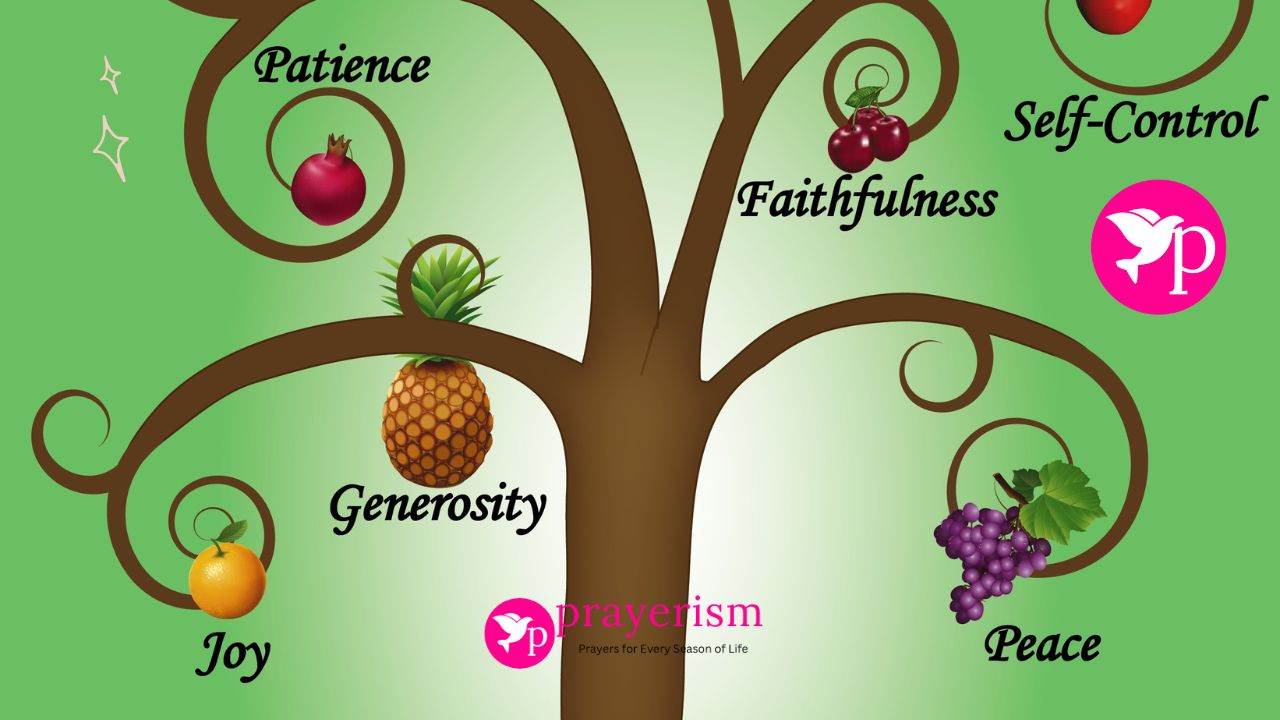
The list in Galatians 5 doesn’t help, at first. Love, joy, peace, patience, kindness, goodness, faithfulness, gentleness, self-control. Nine things. All of them beautiful. All of them, if you’re honest, things you’ve been trying to produce through sheer willpower for years with mixed results. The list doesn’t feel like good news. It feels like a report card.
But that’s because most of us were taught what the fruits are without being taught what they actually are — where they come from, why they resist being forced, and what conditions make them grow.
This article is an attempt to fix that. Not a Sunday school definition of each fruit, but an honest account of what Scripture actually says about why this is hard and what changes when it finally starts working.
What Galatians 5 Is Actually Saying
The context of the fruit of the Spirit passage is almost never preached. Most sermons begin at verse 22 — “But the fruit of the Spirit is…” — and skip the forty verses before it. That’s a problem, because what comes before verse 22 is what gives verse 22 its meaning.
Paul has been making an argument about two ways of living — what he calls walking by the flesh and walking by the Spirit. He gives a list of what the flesh produces: sexual immorality, impurity, debauchery, idolatry, witchcraft, hatred, discord, jealousy, fits of rage, selfish ambition, dissensions, factions, envy, drunkenness, carousing. Then he pivots. But the fruit of the Spirit is something entirely different.
The contrast is not between bad people and good people. It is between two sources. The question Paul is asking is not “are you trying hard enough?” The question is: what are you drawing from?
This is the reframe that changes everything. The fruit of the Spirit is not a performance standard. It is the natural output of a life genuinely connected to the right source. You do not strain to produce fruit. You position yourself where the fruit can grow — and it grows.
1. Galatians 5:22–23
“But the fruit of the Spirit is love, joy, peace, forbearance, kindness, goodness, faithfulness, gentleness and self-control. Against such things there is no law.”
Notice: it is the fruit of the Spirit — singular. Not fruits, plural. Not nine separate achievements to unlock one by one. One fruit with nine expressions. This matters because it means you cannot genuinely have one without the others slowly following. A person growing in real love is also, by necessity, growing in patience.
A person genuinely rooted in joy is also, over time, growing in peace. They are facets of the same thing — the character of God being formed in a person who is staying close to Him.
2. Galatians 5:16
“So I say, walk by the Spirit, and you will not gratify the desires of the flesh.”
The instruction is not: suppress the flesh through discipline. It is: walk by the Spirit. The solution to the wrong source is not trying harder to ignore it — it is drawing more fully from the right one. This is the fundamental shift in understanding that makes Christian growth stop feeling like white-knuckle self-improvement and start feeling like something actually alive.
3. Galatians 5:25
“Since we live by the Spirit, let us keep in step with the Spirit.”
Keep in step — the image is of two people walking together, one matching the pace of the other. Not sprinting ahead. Not lagging behind out of distraction. Staying in step. The fruit grows in proportion to how closely you are keeping pace with the One who produces it.
What the Fruits Actually Are
Not definitions. Not dictionary entries. What each fruit actually feels like when it’s present — and what it reveals about the character of God being formed in you.
Love — The First and the Foundation
The Greek word here is agape — a word that had almost no meaningful usage in secular Greek before the New Testament writers picked it up and filled it with something new. It is not the love that feels good. It is not the love that is returned. It is the love that acts for the benefit of another regardless of what comes back. It is the most demanding thing on this list, which is why it comes first. Everything else flows from it or is a specific expression of it.
4. 1 Corinthians 13:4–7
“Love is patient, love is kind. It does not envy, it does not boast, it is not proud. It does not dishonor others, it is not self-seeking, it is not easily angered, it keeps no record of wrongs. Love does not delight in evil but rejoices with the truth. It always protects, always trusts, always hopes, always perseveres.”
Read this slowly and you will notice something: almost every other fruit of the Spirit appears inside this description of love. Patient. Kind. Not easily angered. Always perseveres. Love is not one fruit among nine equal siblings. It is the parent fruit. The others are its children.
5. Romans 5:5
“And hope does not put us to shame, because God’s love has been poured out into our hearts through the Holy Spirit, who has been given to us.”
The love is poured into you — it does not originate in you. This is the relief at the center of the whole discussion. You are not being asked to generate agape love from your own emotional reserves. You are being asked to stay connected to the One who pours it in, and to let what has been poured overflow outward.
6. 1 John 4:19
“We love because he first loved us.”
Six words that explain the entire mechanism. The love you are capable of giving is derivative — it comes from somewhere. The more you receive His love, the more you have to give. The person who is struggling to love difficult people is often not trying harder at love. They are receiving less of it from the source.
Joy — Deeper Than Happiness
Joy is the most misunderstood fruit on the list, because it gets confused with happiness — and happiness is a feeling that depends entirely on circumstances. Joy is something else. Joy is the settled confidence that, regardless of what is happening around you, something foundational is secure. It is not the absence of grief. It is the presence of something underneath the grief that holds.
7. John 15:11
“I have told you this so that my joy may be in you and that your joy may be complete.”
His joy. In you. The joy Jesus is offering is not a new feeling He is inviting you to manufacture — it is His own joy, transferred. The same settled delight in the Father that sustained Jesus through Gethsemane and the cross is the joy He says can be in you. Complete. Not partial. Not conditional. Complete.
8. James 1:2–3
“Consider it pure joy, my brothers and sisters, whenever you face trials of many kinds, because you know that the testing of your faith produces perseverance.”
James does not say feel happy about trials. He says consider it joy — which is an act of understanding, not an act of emotion. You look at the trial and, knowing what it is producing, you make a decision about how to hold it. Joy is the posture you choose when you know something the circumstances don’t tell you.
9. Nehemiah 8:10
“Do not grieve, for the joy of the Lord is your strength.”
Joy is not a luxury for the spiritually advanced. It is strength for the weary. The person who cannot find joy is also, slowly, losing strength — not because they are weak in character but because they have lost connection to the thing that holds them up. Joy and endurance are not separate things. One feeds the other.
Peace — Not the Absence of Trouble
The Hebrew concept underneath this is shalom — a word that means wholeness, completeness, nothing missing, nothing broken. It is not the peace of a life with no problems. It is the peace of a life held together by something larger than its problems. Jesus said it plainly: “In this world you will have trouble. But take heart! I have overcome the world.” He didn’t promise the trouble would stop. He promised something stronger than the trouble.
10. John 14:27
“Peace I leave with you; my peace I give you. I do not give to you as the world gives. Do not let your hearts be troubled and do not be afraid.”
Not as the world gives. The world gives peace conditionally — when the circumstances cooperate, when the relationships are stable, when the money is there, when the health holds. Jesus gives a different kind — one that does not depend on the conditions being right. It is, in this sense, the most supernatural fruit on the list. It should not be possible. And yet.
11. Philippians 4:6–7
“Do not be anxious about anything, but in every situation, by prayer and petition, with thanksgiving, present your requests to God. And the peace of God, which transcends all understanding, will guard your hearts and your minds in Christ Jesus.”
Transcends all understanding. It is peace that cannot be explained by the circumstances — which is why it is so unmistakable when you encounter it in someone. You can look at their situation and it makes no rational sense that they are not falling apart. And they will tell you: I don’t understand it either. It just holds.
12. Isaiah 26:3
“You will keep in perfect peace those whose minds are steadfast, because they trust in you.”
Perfect peace. Not partial peace. Not peace interrupted by waves of anxiety. The condition is a steadfast mind — a mind that has chosen its anchor and does not keep pulling it up to see if it’s still working. Trust is the root. Peace is the fruit. You cannot manufacture the fruit without deepening the root.
Patience — The Fruit Nobody Prays For
There is an old joke that you should never pray for patience because God will immediately send you something difficult to practice it on. Most people laugh because they recognize the truth in it — patience is almost always forged in exactly the situations you wanted to get out of quickly.
The Greek word Paul uses is makrothumia — literally, long-temperedness. The opposite of short-temperedness. It is the capacity to hold suffering, frustration, or provocation for a long time without snapping. It is not passivity. It is not the absence of feeling. It is the refusal to let the feeling make the decision.
13. Romans 5:3–4
“Not only so, but we also glory in our sufferings, because we know that suffering produces perseverance; perseverance, character; and character, hope.”
Patience is produced, not downloaded. The sufferings you are most desperate to escape are doing something in you that cannot be done any other way. This is not a comfort that makes the suffering less real. It is the context that makes it possible to stay in it without being destroyed by it.
14. Hebrews 12:1
“Let us run with perseverance the race marked out for us.”
Perseverance — the athletic version of patience. Not patience in a waiting room but patience on a track. Active. Moving. Still going. The person who is patient in this sense is not simply enduring. They are running — slowly, perhaps painfully, but still running. The race has their name on it. They have not stopped.
15. Lamentations 3:25–26
“The Lord is good to those whose hope is in him, to the one who seeks him; it is good to wait quietly for the salvation of the Lord.”
It is good to wait quietly. Not easy. Not natural. Good — in the sense that something real is happening in the waiting that would not happen in the rushing. Patience is not wasted time. It is the time during which character is being built that rapid resolution would have bypassed.
Kindness — The Fruit That Costs You Something
Kindness in Scripture is not niceness. Niceness is easy. Kindness is costly. The Greek word is chrestotes — a word that carries the sense of being useful to someone, of meeting an actual need. It is not the kindness of a pleasant attitude. It is the kindness of a person who sees what someone actually needs and moves toward it, even when it inconveniences them.
16. Ephesians 4:32
“Be kind and compassionate to one another, forgiving each other, just as in Christ God forgave you.”
The standard is set by what God did — and what God did was costly. The kindness you are being called to extend has its model in forgiveness that required a cross. Not politeness. Not social graciousness. The kind of movement toward someone that costs you something real.
17. Proverbs 19:22
“What a person desires is unfailing love; better to be poor than a liar.”
What people actually want — underneath everything else — is unfailing kindness. The word is hesed in Hebrew, the covenant lovingkindness of God. This is what the fruit of kindness in a believer’s life begins to approximate: the kind of consistent, non-performative goodness toward others that reflects what God has consistently shown toward us.
18. Luke 6:35
“But love your enemies, do good to them, and lend to them without expecting to get anything back. Then your reward will be great, and you will be children of the Most High, because he is kind to the ungrateful and wicked.”
He is kind to the ungrateful and wicked. This is the definition of divine kindness — it is not earned, it is not reciprocated, it is not conditioned on the recipient’s response. The kindness God is growing in you is not the kindness that comes naturally to pleasant people. It is the supernatural capacity to extend goodness to people who have done nothing to deserve it.
Goodness — The Fruit That Takes a Stand
Goodness is sometimes confused with kindness, but they are different. Kindness bends toward people. Goodness sometimes has to stand against things — because goodness is not just warmth, it is moral uprightness. It is the active pursuit of what is right. Agathosune in Greek carries the sense of a goodness that is sometimes expressed in rebuke and correction, not just in tenderness.
19. Micah 6:8
“He has shown you, O mortal, what is good. And what does the Lord require of you? To act justly and to love mercy and to walk humbly with your God.”
Act justly. Love mercy. Walk humbly. Goodness in the biblical sense holds all three of these together — the commitment to what is right, the compassion toward people, and the posture of humility that knows it is not the standard itself. A person growing in goodness is not just pleasant to be around. They make the world slightly more just wherever they go.
20. Psalm 23:6
“Surely your goodness and love will follow me all the days of my life, and I will dwell in the house of the Lord forever.”
David describes God’s goodness as something that follows him — relentlessly, persistently, across every season of his complicated life. The goodness being formed in you is the goodness of a God like that. Not occasional. Not circumstantial. Following.
21. Romans 15:14
“I myself am convinced, my brothers and sisters, that you yourselves are full of goodness, filled with knowledge and competent to instruct one another.”
Goodness is not passive. It is competent. A person full of goodness has something to give — correction, instruction, wisdom, the kind of honest word that a person who genuinely loves you is willing to say. Goodness without truth is sentimentality. Truth without goodness is cruelty. The fruit holds them together.
Faithfulness — The Fruit Grown in Ordinary Days
Faithfulness is the least dramatic fruit on the list and possibly the most important. It is not the faithfulness of the heroic moment. It is the faithfulness of the ordinary Tuesday. The person who does what they said they would do, who shows up again today the same way they showed up yesterday, who does not require the circumstances to be exciting before they stay true to their commitments.
22. Matthew 25:21
“His master replied, ‘Well done, good and faithful servant! You have been faithful with a few things; I will put you in charge of many things. Come and share your master’s happiness!'”
Faithful with a few things. The commendation is not for dramatic achievement. It is for steady, unremarkable faithfulness with what was actually in the servant’s hands. The “well done” at the end of a life is almost always built from a thousand ordinary days of showing up and doing the next right thing with what you were given.
23. Lamentations 3:22–23
“Because of the Lord’s great love we are not consumed, for his compassions never fail. They are new every morning; great is your faithfulness.”
The faithfulness you are growing into is a reflection of His. Every morning you wake up is morning of new compassion from a God who has never once missed a day. Faithfulness in you is the echo of faithfulness in Him — the recognition that if He shows up every single morning, you can too.
24. 1 Corinthians 4:2
“Now it is required that those who have been given a trust must prove faithful.”
Required. Not optional, not aspirational. The things you have been given — your relationships, your gifts, your calling, your body, your resources — require faithfulness. Not brilliance. Not innovation. Faithfulness. Showing up for what you’ve been trusted with.
Gentleness — The Fruit That Requires Strength
Gentleness is the most misread fruit on this list. In contemporary culture it reads as weakness — the person who is pushed around, who doesn’t assert themselves, who can’t hold a position under pressure. But the Greek word is prautes, and it describes something entirely different: controlled strength. Power that has chosen not to use itself. The warhorse that responds to the bridle. The person who could fight and has decided not to.
Jesus described Himself with this word: “I am gentle and humble in heart.” This is the same Jesus who overturned the tables in the temple and rebuked religious leaders in terms that left no ambiguity about His position. Gentleness is not the absence of strength. It is strength under submission.
25. Matthew 11:29
“Take my yoke upon you and learn from me, for I am gentle and humble in heart, and you will find rest for your souls.”
Learn from me. Gentleness is not a personality trait — it is something learned, in proximity to the One who embodies it. The person growing in gentleness is not a naturally mild-tempered individual who has always been this way. They are someone who has been in the school of Jesus long enough for His character to begin overwriting theirs.
26. Proverbs 15:1
“A gentle answer turns away wrath, but a harsh word stirs up anger.”
Gentleness is not spiritually passive. It is tactically powerful. The gentle answer in a moment of conflict is not the weak response. It is often the most effective one — the one that de-escalates, that creates space for truth to be received, that refuses to add heat to a situation that is already burning. Gentleness changes rooms.
27. 1 Peter 3:4
“Rather, it should be that of your inner self, the unfading beauty of a gentle and quiet spirit, which is of great worth in God’s sight.”
Of great worth in God’s sight. Not great worth in the eyes of a culture that rewards loudness and aggression and the domination of conversations. Great worth in God’s sight. There is a reorientation required to value gentleness — a willingness to measure by a different scale entirely than the one the world is using.
Self-Control — The Fruit of the Long Fight
Last on the list, and for many people the hardest. Egkrateia — the holding of oneself. The ability to say no to an impulse that has momentum. Not once. Not when it’s easy. Consistently, over time, in the moments when everything in you wants to give in and the justifications are already forming in your mind before you’ve even made a decision.
Self-control is the fruit that most directly confronts the specific places where you are most yourself in your worst moments. It is not vague. It attaches to the exact thing you know is true about you — the specific appetite, the specific pattern, the specific way you respond when nobody is watching. It is the most personal fruit and the most revealing one.
28. 1 Corinthians 9:25–27
“Everyone who competes in the games goes into strict training. They do it to get a crown that will not last, but we do it to get a crown that will last forever. Therefore I do not run like someone running aimlessly; I do not fight like a boxer beating the air. No, I strike a blow to my body and make it my slave so that after I have preached to others, I myself will not be disqualified.”
Paul’s language is athletic and severe. He is not talking about mild preference management. He is talking about discipline that costs something — the discipline of someone who is actually trying to win, not just trying to look like they’re competing. Self-control in the Spirit is not comfortable. It requires a daily decision about who is in charge of you.
29. 2 Peter 1:5–6
“For this very reason, make every effort to add to your faith goodness; and to goodness, knowledge; and to knowledge, self-control; and to self-control, perseverance; and to perseverance, godliness.”
Self-control is positioned between knowledge and perseverance — which tells you something about its nature. It requires knowing what you are trying to do (knowledge) and the willingness to keep doing it when you fail (perseverance). It is not a one-time achievement. It is a direction of travel maintained over a long stretch of time.
30. Proverbs 25:28
“Like a city whose walls are broken through is a person who lacks self-control.”
An ancient city without walls was not just exposed — it was defenseless. Anyone and anything could walk in. The person without self-control is not just inconvenienced by their impulses. They are, in the language of this proverb, undefended. The appetites and moods and reactions that should be governed are instead governing them. Self-control is not about restriction. It is about protection.
Why They’re Hard — The Thing Nobody Says Out Loud
Here is what most teaching on the fruit of the Spirit skips: the reason these things are hard is not primarily that you lack discipline. The reason they are hard is that you are trying to produce in the flesh what can only grow in the Spirit.
Every person who has gritted their teeth and tried to be more patient, more joyful, more self-controlled through sheer determination knows what happens. It works for a while.
And then something catches you off guard — the wrong comment, the long wait, the unexpected disappointment — and everything you were managing collapses in about thirty seconds and you are back where you started, maybe worse, because now you are also ashamed of failing again.
The problem is not effort. The problem is source.
31. John 15:4–5
“Remain in me, as I also remain in you. No branch can bear fruit by itself; it must remain in the vine. Neither can you bear fruit unless you remain in me. I am the vine; you are the branches. If you remain in me and I in you, you will bear much fruit; apart from me you can do nothing.”
Apart from me you can do nothing. Not less. Nothing. The branch that is disconnected from the vine does not produce smaller fruit. It produces no fruit at all — it withers. This is not discouraging. It is clarifying. The reason the fruit isn’t growing is not a character flaw. It is a connection problem. Stay in the vine. The fruit follows the staying.
32. Romans 7:18–19
“For I know that good itself does not dwell in me, that is, in my sinful nature. For I have the desire to do what is good, but I cannot carry it out. For I do not do the good I want to do, but the evil I do not want to do — this I keep on doing.”
Paul wrote this. Paul — the most prolific theologian in the New Testament, the man who planted churches across the Roman world, the one who said he had learned contentment in every state. He still knew this feeling. The gap between what you want to do and what you actually do is not a sign that your faith is fake. It is the normal experience of a person living in the tension between the old nature and the new one. You are in good company.
33. Galatians 5:17
“For the flesh desires what is contrary to the Spirit, and the Spirit what is contrary to the flesh. They are in conflict with each other, so that you do not do what you want.”
There is a conflict. Paul names it. He doesn’t say there shouldn’t be one or that the conflict means you’re doing it wrong. He says the conflict is real, it is ongoing, and it is the precise terrain on which the Christian life is lived. The fruit grows in the middle of this conflict — not after it is resolved.
34. Romans 8:13
“For if you live according to the flesh, you will die; but if by the Spirit you put to death the misdeeds of the body, you will live.”
By the Spirit. Not by willpower alone. Not by accountability partners alone. Not by behavioral modification programs alone. By the Spirit — which means the source of the putting to death is the same Spirit who produces the fruit. You participate actively. But you draw the power from somewhere beyond yourself.
How the Fruit Actually Grows
This is the part that changes the practice. Because if the fruit grows through connection to the vine, then the question is not “how do I try harder?” The question is “what does remaining in the vine actually look like on a Tuesday morning when my faith feels thin and the circumstances are pressing?”
35. Colossians 3:16
Let the message of Christ dwell among you richly as you teach and admonish one another with all wisdom through psalms, hymns, and songs from the Spirit, singing to God with gratitude in your hearts.
Let it dwell — not visit, not pass through, not be consulted occasionally. Dwell. Richly. The Word of God living in you as a resident, not a guest, changes what comes out of you when you are under pressure. You cannot pour out what you have not been filled with.
36. Romans 12:2
“Do not conform to the pattern of this world, but be transformed by the renewing of your mind. Then you will be able to test and approve what God’s will is — his good, pleasing and perfect will.”
Transformed by the renewing of your mind. The fruit grows as the mind is renewed — as the way you think about yourself, others, God, and circumstances is slowly rewritten by truth. This is why the person who reads the Word daily is not just theologically informed. They are different. The renewal is happening at the level of default assumption, and the fruit is the surface expression of that deep work.
37. Psalm 1:2–3
“But whose delight is in the law of the Lord, and who meditates on his law day and night. That person is like a tree planted by streams of water, which yields its fruit in season and whose leaf does not wither — whatever they do prospers.”
Planted by streams of water. The fruit comes not from the effort of the tree but from the position of the tree. A tree planted next to a constant water source does not have to strain to produce fruit — it is simply doing what a tree does when its roots are in the right place. Meditation on the Word is not a religious exercise. It is root placement.
38. 1 Thessalonians 5:17
“Pray continually.”
Two words that describe a posture more than a practice. Not two-hour daily prayer sessions (though those are good). The ongoing awareness of God’s presence throughout the day — the continuous conversation that keeps the connection open. The fruit grows in the climate of ongoing prayer the way certain plants only bloom in consistent warmth. You cannot manufacture the warmth. You can stay in it.
39. Hebrews 10:24–25
“And let us consider how we may spur one another on toward love and good deeds, not giving up meeting together, as some are in the habit of doing, but encouraging one another — and all the more as you see the Day approaching.”
The fruit grows in community. The branch that tries to bear fruit in isolation — detached from the body, from accountability, from the encouragement of other believers — is working against the design. You were not built to grow alone. The people around you are part of the conditions that make growth possible.
40. James 1:2–4
“Consider it pure joy, my brothers and sisters, whenever you face trials of many kinds, because you know that the testing of your faith produces perseverance. Let perseverance finish its work so that you may be mature and complete, not lacking anything.”
Let perseverance finish its work. One of the most counterintuitive instructions in Scripture. Do not short-circuit the trial before it has finished what it came to do. The fruit that grows in easy seasons is thinner than the fruit that grows under pressure. Some of what God is forming in you can only be formed the hard way — and the invitation is not to escape it but to let it complete its work.
41. Philippians 4:11
“I have learned, in whatever state I am, to be content.”
Learned. Paul did not arrive with contentment pre-installed. He learned it — which means it was taught, which means it took time, which means there were seasons where he had not yet learned it. The fruit of the Spirit is not a download. It is a curriculum. You are in the middle of yours right now.
The Fruit and the Spirit — More Verses to Pray and Meditate On
42. Romans 8:5
“Those who live according to the flesh have their minds set on what the flesh desires; but those who live in accordance with the Spirit have their minds set on what the Spirit desires.”
It begins with where the mind is set. Before the behavior changes, the orientation changes. Before the fruit appears, the root goes deeper. The most important question in any given moment is not “what am I doing?” It is “where is my mind set?”
43. 2 Corinthians 3:18
“And we all, who with unveiled faces contemplate the Lord’s glory, are being transformed into his image with ever-increasing glory, which comes from the Lord, who is the Spirit.”
Being transformed — present continuous tense. Not a completed event. An ongoing process. The fruit is the visible expression of a transformation that is still happening in you right now, even in the seasons when you cannot see the evidence of it.
44. Ezekiel 36:26–27
“I will give you a new heart and put a new spirit in you; I will remove from you your heart of stone and give you a heart of flesh. And I will put my Spirit in you and move you to follow my decrees and be careful to keep my laws.”
God is the initiator. He removes. He gives. He puts. He moves. The fruit is His project — you are the soil, not the gardener. The gardener is faithful. The soil’s responsibility is to stay broken up, receptive, and near the water.
45. Romans 8:29
“For those God foreknew he also predestined to be conformed to the image of his Son, that he might be the firstborn among many brothers and sisters.”
Conformed to the image of His Son. This is the destination the fruit is moving toward — not a better version of you, but the character of Christ formed in you. The nine expressions in Galatians 5 are not personality upgrades. They are the character of Jesus becoming visible in a human life. That is what you are becoming.
46. Psalm 92:12–14
“The righteous will flourish like a palm tree, they will grow like a cedar of Lebanon; planted in the house of the Lord, they will flourish in the courts of our God. They will still bear fruit in old age, they will stay fresh and green.”
Still bear fruit in old age. The growth does not stop. The person who has been walking with God for decades does not plateau — they become more, not less. The fruit of a life deeply rooted in God is not seasonal. It is perennial. It stays fresh. It stays green. The best is not behind you.
47. Galatians 6:8
“Whoever sows to please their flesh, from the flesh will reap destruction; whoever sows to please the Spirit, from the Spirit will reap eternal life.”
Sowing and reaping. The fruit you are experiencing today is partly the harvest of seeds sown in previous seasons. The fruit you will experience in future seasons is being planted by decisions you are making right now. Every morning you choose the Word over the noise, prayer over distraction, obedience over convenience — you are planting. The harvest comes.
48. John 15:8
“This is to my Father’s glory, that you bear much fruit, showing yourselves to be my disciples.”
Much fruit — not managed fruit, not occasional fruit, not fruit-in-theory. Much fruit. This is what God intends for your life. Not a thin, struggling, barely-hanging-on version of the nine. An abundant, visible, undeniable expression of the character of God in a human being who stayed in the vine long enough for something real to grow.
49. Isaiah 61:3
“And provide for those who grieve in Zion — to bestow on them a crown of beauty instead of ashes, the oil of joy instead of mourning, and a garment of praise instead of a spirit of despair. They will be called oaks of righteousness, a planting of the Lord for the display of his splendor.”
A planting of the Lord — for the display of His splendor. You are not growing fruit for your own reputation. You are a display of who He is. The joy instead of mourning, the praise instead of despair — these are not self-improvements. They are testimonies. The fruit your life bears tells the world something about the God who grew it.
50. Galatians 5:24
“Those who belong to Christ Jesus have crucified the flesh with its passions and desires.”
Have crucified — past tense. The decisive moment has happened. The flesh does not have the final claim on you. What comes after the cross is not more death — it is resurrection. The fruit of the Spirit is resurrection life — the evidence that something that was dead is now alive, growing, producing what it was designed to produce.
A Closing Prayer
Lord, I bring before You everyone reading this who is tired of feeling like they are failing at the very things Your Spirit came to produce in them.
The person who lost their patience again today and is sitting with the familiar weight of that. The person who cannot find joy no matter how many times they try to choose it. The person who has prayed for peace and still wakes up anxious. The person who has read this list and felt it as a standard they are not measuring up to rather than a promise they are growing into.
Remind them that the fruit is Yours. That You are the gardener. That You do not plant something and then abandon it. That the same Spirit who raised Christ from the dead is living in them — and that Spirit is not finished yet.
Deepen the roots. Increase the staying. Let the Word dwell richly. Let the prayer be continuous. Let the community be real.
And where thereou the glory for what You have grown.
Make them oaks of is fruit already — love that costs something, joy that holds through grief, peace that should not make sense, patience that surprised even them — let them see it. Let them recognize Your work in their own life and give Yrighteousness. A planting of the Lord, for the display of Your splendor.
In Jesus’ name, Amen.
Frequently Asked Questions
What is the fruit of the Spirit and where is it found in the Bible?
The fruit of the Spirit is found in Galatians 5:22–23, where the apostle Paul lists nine qualities produced in the life of a believer who walks in step with the Holy Spirit: love, joy, peace, patience, kindness, goodness, faithfulness, gentleness, and self-control.
Why is it called “fruit” and not “works” or “virtues”?
The metaphor is deliberate and important. Fruit does not strain to grow — it grows because the branch is connected to the vine. Jesus uses this same metaphor in John 15:4–5: “No branch can bear fruit by itself; it must remain in the vine.” This distinguishes the fruit of the Spirit from moral effort or behavioral modification. Works are produced by human effort. Fruit is produced by a living connection.
The person who tries to manufacture love, joy, or self-control through discipline alone will exhaust themselves. The person who focuses on staying connected to God — through the Word, prayer, and community — finds that the fruit appears as a byproduct of the connection.
Do I have to have all nine fruits equally, or can I be stronger in some than others?
Because Paul describes the nine as a single fruit rather than separate items, a fully mature expression of the Spirit’s work in a person would include all nine. However, in practice, different qualities grow at different rates in different people, often shaped by personality, life experience, and the specific areas God is currently addressing. A naturally joyful person may find peace easier to grow than patience. A naturally disciplined person may find self-control more developed than gentleness.
What is the difference between the fruit of the Spirit and the gifts of the Spirit?
The gifts of the Spirit (found in Romans 12, 1 Corinthians 12, and Ephesians 4) are specific abilities given by the Spirit for the building up of the church — things like prophecy, teaching, healing, administration, and encouragement. They are distributed differently among believers: not everyone has the same gifts. The fruit of the Spirit, by contrast, is the character of Christ being formed in every believer. Every Christian is called to grow in all nine expressions of the fruit, whereas not every Christian will operate in every spiritual gift.
A helpful way to think about it: gifts are what the Spirit gives you to do. Fruit is what the Spirit grows in you to be. Both matter. But a person can exercise impressive spiritual gifts while lacking the fruit — which is precisely what 1 Corinthians 13 addresses when Paul says that without love, even the most spectacular gifts are nothing.
What if I’ve been a Christian for years and I still struggle with the same things?
You are in the company of Paul, who wrote in Romans 7 that he kept doing the very thing he did not want to do and failed to do the very thing he wanted to do. Duration of faith does not eliminate the conflict between the flesh and the Spirit — it changes the terrain of it. What typically happens over years of genuine walking with God is not the disappearance of the struggle but a shift in where the struggle is most intense. Areas that once required enormous effort become more natural; new areas surface that require attention.
The question worth asking is not “why am I still struggling?” but “in which direction am I moving?” Ongoing struggle with the same sin, accompanied by genuine grief, genuine repentance, and genuine effort to reconnect with God — this is not evidence of failed faith. It is the normal experience of a person fighting the right battle. If there is no movement at all and no desire for movement, that is worth bringing honestly before God and a trusted pastor.
How do I practically grow in the fruit of the Spirit day to day?
Three things, in order of importance. First, stay in the Word — not as a duty but as nourishment. The renewal of the mind that Romans 12:2 describes happens through regular, sustained immersion in Scripture. It rewrites the default assumptions that govern your reactions before you consciously process them.
Second, maintain ongoing conversation with God — what the Bible calls praying without ceasing (1 Thessalonians 5:17). Not formal prayer only, but the continuous awareness of His presence throughout ordinary moments. The fruit grows in the climate of this awareness.
Third, stay in community — with people who will tell you the truth about what they see in you, who will pray with you, and who will challenge you toward growth. The branch on the vine is surrounded by other branches. Isolation is not the environment God designed for fruit-bearing.
Beyond these three, stay in the trials without fleeing them prematurely — James 1 is clear that the testing of faith produces the very qualities we are discussing. The hardest seasons are often the most productive ones.