Life and Death Is in the Power of the Tongue — What Proverbs 18:21 Really Means
There are thirty-one chapters in the Book of Proverbs. Scattered across them are more than fifty individual references to the tongue, the mouth, speech, and words. No other subject in Proverbs receives this kind of sustained, concentrated attention. Not money. Not wisdom. Not even relationships.
The wise men of ancient Israel were clearly convinced that what human beings do with their speech is one of the most consequential things they do — full stop.
And of all these references, one verse stands above the rest in both its brevity and its claim: Proverbs 18:21. Eleven Hebrew words. Two stark opposites — death and life. One small organ — the tongue. And a conclusion that the ancient world found obvious and that the modern world keeps being surprised by: what you say matters, in ways far deeper than you usually acknowledge.
But Proverbs 18:21 is not as simple as it appears on first reading. The verse has a second half that almost nobody quotes. It contains Hebrew words whose full meaning the English translation only partially captures. It belongs to a literary context in Proverbs 18 that sharpens its meaning considerably. And it connects — through a thread that runs through the whole Bible, from Genesis to James — to one of the most profound doctrines in all of Scripture: the relationship between words and reality.
This study is an attempt to do justice to all of that.
Death and life are in the power of the tongue,
and those who love it will eat its fruit.
What the Original Words Actually Say
Three key Hebrew words whose full meaning the English translation only partially captures
Proverbs is poetry. Like all Hebrew poetry, it is constructed with precision — every word chosen, every image deliberate. To understand Proverbs 18:21, we need to spend time in the Hebrew.
The verse in Hebrew reads: מָוֶת וְחַיִּים בְּיַד־לָשֹׁון — mawet v’chayyim b’yad-lashon.
The English word “power” in most translations is the Hebrew yad, which literally means “hand.” The tongue does not merely possess power in some abstract sense — it holds life and death the way a craftsman holds a tool or a soldier holds a weapon. The image is tactile and active. The hand is the organ of work, of control, of making things happen. To say the tongue’s “hand” holds life and death is to say that speech is the primary instrument by which human beings act upon the world.
Lashon means the tongue as an organ, but in Hebrew it is also the primary word for language, speech, and the act of speaking. The double meaning is not accidental. James would later pick up the same connection, calling the tongue “a fire” — both tongue-shaped and incendiary. The physical organ and the speech it produces are the same word because in Hebrew understanding, you cannot separate them: the tongue is defined by what it speaks, and speech is defined by the organ that produces it.
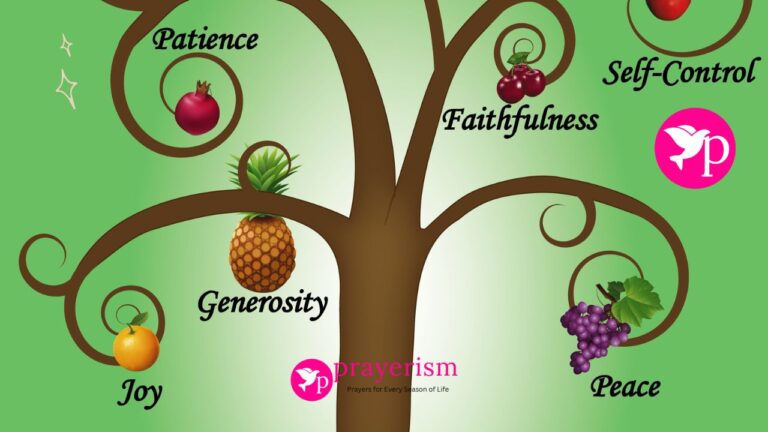
Piryah is the word for fruit — the natural produce of a living thing. The fruit metaphor in the second half of the verse is doing important theological work that the first half prepares us for. The tongue produces a harvest. And you, the speaker, are the one who eats it.
One more crucial observation about the Hebrew literary structure: scholars note that “death and life” in this verse forms what is called a merism — a figure of speech in which two extremes are used to encompass everything between them. When Psalm 139 says God knows “my sitting down and my rising up,” it means He knows everything I do. When Genesis says God created “the heavens and the earth,” it means He created the entire universe. When Proverbs 18:21 says the tongue holds “death and life,” it means the tongue holds every possible human reality between those two poles. Every blessing, every wound, every comfort, every devastation. All of it.
“Those Who Love It Will Eat Its Fruit”
The second half of Proverbs 18:21 changes the entire meaning of the first — and almost nobody quotes it
Ask most people to quote Proverbs 18:21 and they will say: “Life and death are in the power of the tongue.” Full stop. But the verse does not end there. It continues: “and those who love it will eat its fruit.” This second clause is not decorative. It is the application that makes the principle unavoidable.
Hebrew scholars Keil and Delitzsch note that the verse presents “the tongue” as something to which the speaker relates — either loving it or not. Those who are devoted to their speech, who give themselves to the exercise of talking, who invest in words — they will eat the harvest that their words produce. This is a statement about accountability and consequence that runs through the whole of wisdom literature.
“The mouth of the righteous is a fountain of life, but the mouth of the wicked conceals violence.”
— Proverbs 10:11 (ESV) — the tongue’s fruit, already in evidenceThe “fruit” language is deliberately agricultural. A farmer does not plant seeds and then choose whether to experience a harvest — the harvest comes. The farmer eats what grows. The only variable is what was planted. So it is with speech: words are seeds, and time is the growing season. The person who plants words of encouragement eats the fruit of restored relationships, of hope given and received. The person who plants words of contempt eats the fruit of broken trust and isolating bitterness. The harvest is not metaphorical. It is what actually happens in the life of the person who spoke.
This principle appears throughout Proverbs and the New Testament. Jesus states it with alarming directness: “by your words you will be justified, and by your words you will be condemned” (Matthew 12:37). Not by your intentions. Not by what you meant to say. By your words. Those who love the tongue will eat its fruit — and that fruit will one day be the evidence by which they are known.
“For the mouth speaks what the heart is full of.”
— Matthew 12:34 (NIV) — the tongue is always revealing something about the insideIn the Beginning, God Spoke
To understand why Proverbs takes speech so seriously, we need to go to the first chapter of the first book of the Bible. Genesis 1 does not begin with God making things — it begins with God saying things. “And God said, ‘Let there be light’ — and there was light.” The pattern repeats through the entire creation account: God speaks, and what He says comes into being. The universe is called into existence through divine speech.
We are not God. Our words do not create from nothing the way His do. But because we are made in His image, our words participate in a derivative version of His creative act. When a mother says to her child, “I am proud of you — I believe in you,” something happens that would not have happened if she had stayed silent. A future is shaped. A self-understanding is formed. When a man says to his spouse, “I don’t love you anymore,” something is destroyed that cannot easily be rebuilt. Words do not merely describe reality — they participate in creating it.
This is why the tongue’s power is not merely psychological, not merely social, not merely practical. It is, at its root, theological. The tongue’s power to give life or deal death is a reflection of the divine image in which we were made. And the responsibility that comes with that image is enormous.

The New Testament’s Anatomy of the Tongue
James devotes an entire chapter to the tongue — and he uses four vivid metaphors to make his case from every angle
Proverbs 18:21 names the power of the tongue. James 3 anatomises it. Where Proverbs states the principle, James demonstrates it through a sequence of images that approach the same truth from four different angles. Each metaphor adds something new to our understanding of why the tongue is so consequential.
Each metaphor is carefully chosen. The bit and rudder teach us about disproportionate influence — a small thing controlling a large thing. The spark and forest teach us about irreversible damage — small causes and catastrophic consequences. The spring and water teach us about fundamental contradiction — the impossibility of the same source producing opposite things.
But James adds something that Proverbs 18:21 does not explicitly state: the tongue is “a fire, a world of iniquity… set on fire by hell” (James 3:6). The untamed tongue is not merely a human problem — it has a source below. The destructive power of speech is not just our natural tendency toward thoughtlessness. It is connected to a spiritual energy that is actively hostile to life, to goodness, and to the image of God in our neighbours.
“No human being can tame the tongue. It is a restless evil, full of deadly poison.”
James’s conclusion is deeply uncomfortable: no human being can tame the tongue. Not through discipline alone. Not through willpower. Not through good intentions. The tongue is a “restless evil” that resists every human attempt at domestication. This is not defeatism — it is theological realism. If the tongue’s fire comes from below, the only remedy must come from above. Tamed speech is the fruit of a transformed heart — and heart transformation is the work of grace, not self-improvement.
What Proverbs 18:21 Does Not Mean
Proverbs 18:21 is one of the most misapplied verses in contemporary Christianity. The word-of-faith movement and various prosperity gospel teachers have read it as a promise that our words have direct creative power over our circumstances — that we can “speak things into being,” that confessing healing makes you healed, that declaring prosperity creates prosperity.
This reading does not hold up under examination of the text or its context. The verse is wisdom literature, not a promise or a formula. Wisdom literature describes patterns and tendencies in God’s ordered creation — it does not give blanket guarantees for individual situations. Proverbs also says “a gentle answer turns away wrath” (15:1), but anyone who has ever tried a gentle answer with an unreasonable person knows this is a principle, not a magic spell.
Proverbs 18:21 is not telling us that our words control God, reality, or the laws of physics. It is telling us that speech is morally and relationally consequential in ways we consistently underestimate. The tongue shapes relationships, forms character, influences how others see themselves and the world — and through these channels, it participates in giving life or dealing death. That is a profound and sobering truth. It does not need to be inflated into a prosperity formula, because it is already as significant as it can possibly be.
Death-Speaking and Life-Speaking — What Each Looks Like
The contrast is not abstract — it shows up in ordinary speech every day
Solomon was not speaking about dramatic curses and elaborate blessings. He was speaking about the ordinary use of the tongue — the daily, habitual, almost unconscious way we speak to and about ourselves and others. Here is what the contrast looks like in practice:
| ☠️ Death-Speaking — Words That Diminish | 🌿 Life-Speaking — Words That Build |
|---|---|
| “You always do this” / “You never change” | “I’ve seen you grow. I believe you can handle this.” |
| Gossip — sharing someone’s failure or shame with those who don’t need to know | Confidentiality — protecting what was shared with you in trust |
| “I’m so stupid / ugly / worthless” — spoken about yourself | “I am fearfully and wonderfully made” — speaking truth about yourself |
| Criticism offered without invitation, in public, without care | Feedback offered privately, with love, for the person’s growth |
| Exaggeration and deception — words that warp reality | Honest speech — words that describe reality as it actually is |
| Complaint as a lifestyle — words that rehearse what is wrong | Gratitude as a practice — words that acknowledge what is good |
| Silence when encouragement was urgently needed | “A word fitly spoken is like apples of gold in a setting of silver.” — Proverbs 25:11 |
You Will Eat the Fruit of Your Words — For Better or Worse
The second half of Proverbs 18:21 returns us to the harvest principle. Words are seeds. Every word you have ever spoken has been planted somewhere — in the soil of a person’s heart, in the life of a relationship, in the ground of your own soul. And seeds do not simply vanish. They grow, or they rot, and either way they produce something.
The person who has spent years speaking harshly does not only damage the people around them — they damage themselves. They become a person whose internal landscape matches their speech. Bitterness spoken outward becomes bitterness settled inward. Cruelty expressed becomes cruelty embedded. James says the tongue “stains the whole body” — not only the targets of our speech, but the speaker themselves.
But the reverse is equally true, and perhaps more important to say. The person who has spent years speaking words of encouragement, of honest affirmation, of gentle truth, of patient compassion — they also eat the fruit of that. They become a person whose character has been shaped by the discipline of choosing life-giving words. They inhabit relationships that have been built by the words they chose, rather than wrecked by the words they didn’t think about. They become, in some small way, a person through whom others experience something of the life-giving speech of God Himself.
“A gentle tongue is a tree of life, but perverseness in it breaks the spirit.”

Five Practical Ways to Use Your Tongue for Life
Taming the tongue is not a willpower project — it is a transformation project. But it begins with intentional practice.
The most neglected battlefield for the tongue is your own inner speech. The words you speak about yourself — aloud and internally — are shaping you. Replace lies about your identity with what God’s Word says is true: you are made in His image, loved, purposeful, redeemable. This is not positive thinking. It is believing what is actually true.
Proverbs 29:20 says: “Do you see someone who speaks in haste? There is more hope for a fool than for them.” The pause between impulse and speech is where wisdom lives. James 1:19 makes the sequence clear: “quick to listen, slow to speak, slow to become angry.” Speed of speech is almost always the enemy of wisdom.
Three questions drawn from Ephesians 4:29: Is it true? Is it helpful for building up? Does it fit the occasion? Paul adds one more: “that it may give grace to those who hear.” Grace to the hearer — not just accuracy, not just your right to say it, but what your words will do to the person receiving them.
Proverbs 26:20 says: “Without wood, a fire goes out; without a gossip, a quarrel dies down.” Refusing to add fuel — declining to repeat what will harm, choosing not to escalate what has begun — is one of the most powerful uses of the tongue: the strategic withholding of destructive speech. Silence, in these moments, is life-giving.
Proverbs 25:11: “A word fitly spoken is like apples of gold in a setting of silver.” Not general praise but specific, observed, honest affirmation of something real you see in someone. This is one of the most powerful and rare uses of the tongue. Most people have never been told, specifically, what someone genuinely admires about them.
And Then There Is the Word Made Flesh
The Bible’s ultimate statement on the power of divine speech
No study of the power of speech in Scripture is complete without coming to John 1:1 — “In the beginning was the Word, and the Word was with God, and the Word was God.” The second Person of the Trinity is identified as the Logos — the Word, the Speech, the Expression of God. And then verse 14: “The Word became flesh and dwelt among us.”
The supreme act of divine communication was not a book, not a sermon, not a set of laws — it was a Person. God’s most complete and final Word to humanity was spoken in the form of a human life. And in that human life, words were used with absolute precision: healing the sick, forgiving the guilty, rebuking the hypocrite, commissioning the broken, restoring the excluded, and speaking the words from the cross that make redemption available to everyone who believes them.
Jesus was also the one who said: “I tell you, on the day of judgment people will give account for every careless word they speak, for by your words you will be justified, and by your words you will be condemned” (Matthew 12:36–37). The same Jesus who spoke life over Lazarus and spoke peace over the storm was under no illusion about the weight of human speech. He knew, better than anyone, what words can do — because He is the Word who did the most.
Eleven Hebrew Words — and a Lifetime of Responsibility
Proverbs 18:21 is eleven Hebrew words. Death and life are in the hand of the tongue. Those who love it will eat its fruit.
The good news is not that you can achieve perfect speech through sufficient willpower. The good news is that the God who made the tongue also offers to transform the heart from which the tongue speaks. The remedy for untameable speech is not better habits — it is a new heart, filled with a new love, directed by a new wisdom from above. “The mouth speaks what the heart is full of.” So the deepest work of the tongue is always, ultimately, the work of filling the heart with what is true, and good, and life-giving — with the Word of God Himself.
Then the fruit will take care of itself.
“Let no corrupting talk come out of your mouths, but only such as is good for building up, as fits the occasion, that it may give grace to those who hear.”
Which Way Are You Using Your Tongue?
Life-giving or death-dealing — our words are rarely neutral. Which specific area of your speech do you most want to change? Share in the comments below.